The Fixed Bit: What Your Energy Standing Charge Actually Buys You
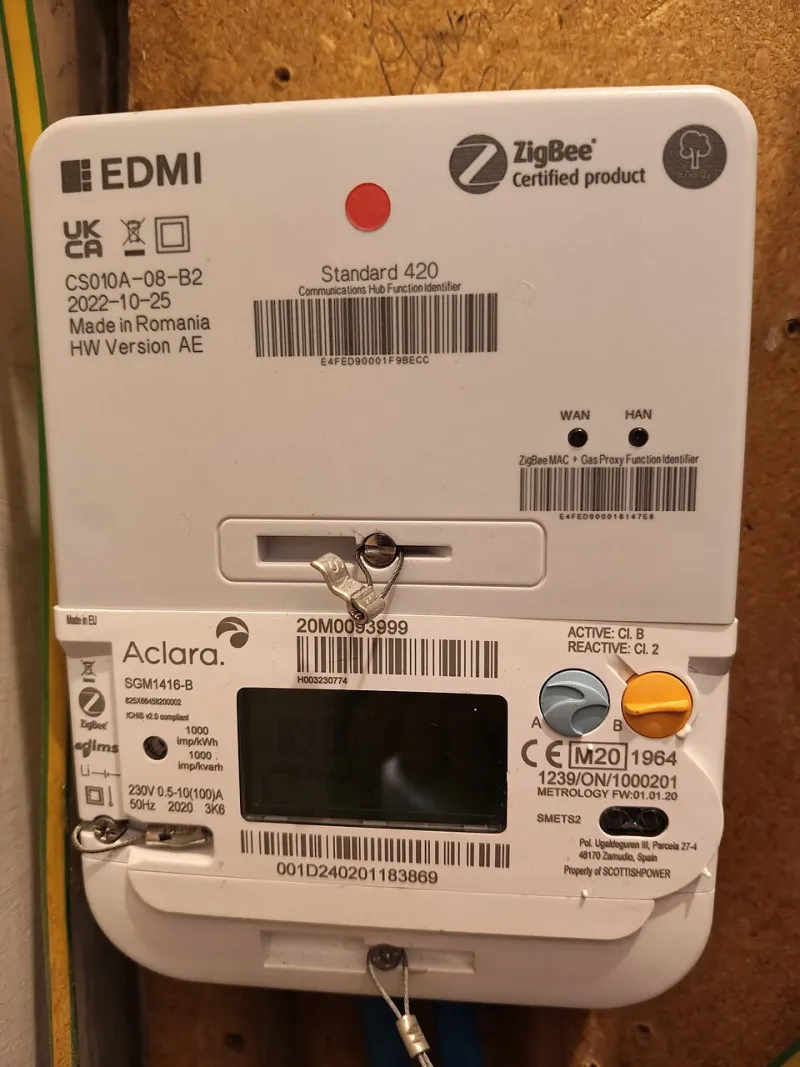
Photo: SpicyPhoto, CC0, via Wikimedia Commons
There's a particular kind of confusion that arrives with a mild-weather energy bill. You've been careful. The heating stayed off. The tumble dryer gathered dust. And yet the total looks stubbornly familiar. The reason is usually sitting in plain sight, a few lines above the usage figures: the standing charge.
It's the fixed daily amount you pay simply for being connected, before you've boiled a kettle or charged a phone. In 2026 it's a routine part of every UK energy bill, and it's the bit most of us skim past on the way to the unit rate. This is a calm look at what it does, why it differs from one street to the next, and how to factor it into a switching decision without turning it into a daily outrage.
The charge that clocks on before you do
Think of it as the connection fee. Electricity standing charges under the price cap have typically sat somewhere between 50p and 70p a day in recent years, with gas usually lower. At 60p a day, that's a little over £219 a year before a single unit of energy is used. For a household using the regulator's typical figure of around 2,700 kWh of electricity, it's a meaningful slice of the total — and for a low user, it can be the biggest single line on the bill.
The charge applies every day, whether you're home or away, whether the sun is shining on your solar panels or not. That's not a loophole or a penalty. It's just how the cost of keeping a property connected is recovered.
What you're actually paying for
The standing charge isn't a supplier's slush fund. It's a bundle of fixed costs that don't change much with how much energy you use. The biggest element is usually the network: the pipes, cables and substations that carry power to your door, plus the cost of maintaining and upgrading them. Then there's metering — including the smart meter rollout — and the supplier's own fixed costs for billing, customer service and keeping the lights on at their end.
A share of government scheme costs, such as support for vulnerable households and some environmental obligations, also finds its way into the fixed side of the bill. The exact split varies by supplier and region, but the principle is consistent: these are costs that exist whether you use 1,500 kWh a year or 15,000.
Why your neighbour's is different
Standing charges vary by region because the costs of running the network vary. The UK is split into 14 electricity distribution areas, and each has its own price for using the wires. Areas with sparse populations, long distances to cover and harsher weather — parts of northern Scotland, for example — tend to carry higher network costs than dense urban areas. It's not a postcode lottery in the conspiratorial sense; it's a reflection of what it costs to keep the infrastructure running where you live.
Meter type matters too. Economy 7 and other two-rate meters often carry a higher standing charge, because there's more metering equipment involved and the off-peak arrangement has its own cost base. Prepayment meters historically carried a premium, though under the price cap that gap has largely been closed for standard tariffs — it's still worth checking the specific numbers on your own deal rather than assuming.
The low-usage trap
Here's where it gets quietly interesting. Because the standing charge is fixed, it takes up a larger share of a smaller bill. A household using 4,000 kWh a year might see the standing charge account for around 20% of the electricity total. A household using 1,500 kWh — a small flat, a home with solar and a battery, a property that's empty for part of the year — could see it account for 35% or more.
That doesn't make the charge unfair. It does mean that low-usage households should pay closer attention to it than high-usage ones, because a tariff with a low unit rate and a high standing charge may not be the bargain it first appears.
Doing the sums properly
Comparing tariffs on the unit rate alone is like comparing cars on fuel economy without asking the purchase price. The honest number is the annual total: (standing charge × 365) + (unit rate × your annual kWh).
Take two illustrative tariffs. Tariff A has a 60p standing charge and a 24p unit rate. Tariff B has a 45p standing charge and a 27p unit rate. For 1,800 kWh a year, Tariff A costs £219 + £432 = £651. Tariff B costs £164.25 + £486 = £650.25. Practically identical. For 4,000 kWh, Tariff A comes to £1,179 and Tariff B to £1,244.25 — now Tariff A is clearly cheaper.
The crossover point is simple to work out: divide the difference in standing charges by the difference in unit rates. Here, 15p ÷ 3p = 5, so the two tariffs break even at 5,000 kWh. Above that, the lower-standing-charge tariff wins; below it, the higher one does. Your own numbers will differ, but the method doesn't.
Where to look, and what to ignore
Start with your actual annual usage in kWh, not the monthly direct debit. It's on your bill, and a smart meter display or supplier app will usually show it. Then use a comparison site with that figure plugged in, and look at the estimated annual cost rather than the headline unit rate. Check exit fees if you're mid-contract, and don't overlook the small print on smart meter compatibility if you're on an older meter.
A small number of tariffs with lower or zero standing charges have appeared in the market, usually paired with a higher unit rate. They can suit very low users, but they're not automatically better — run the same annual total calculation. Ofgem has also been consulting on ways to give households more choice over how fixed costs are recovered, so the shape of the market may shift, but the arithmetic won't.
The calm takeaway
The standing charge isn't a villain. It's the fixed cost of being connected, and it's capped as part of the price cap, so there's no individual haggling to be done over it. What you can control is the tariff you choose and the way you compare it. Look at the annual total, know your own kWh, and let the break-even sum do the talking. The bill before the bill is easier to live with once you can see what's in it.